
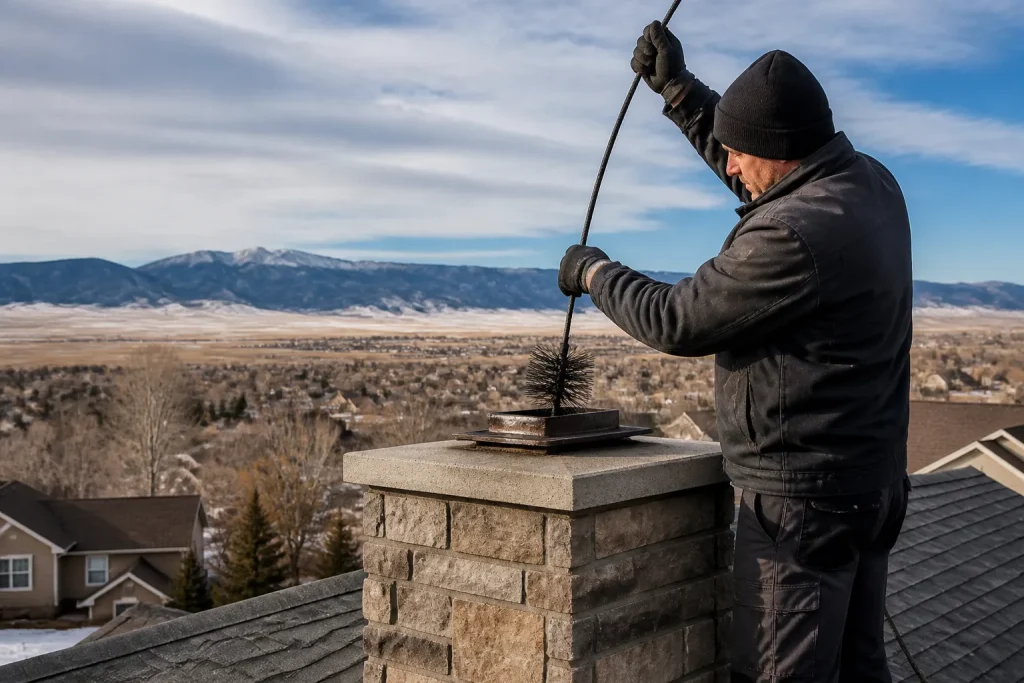
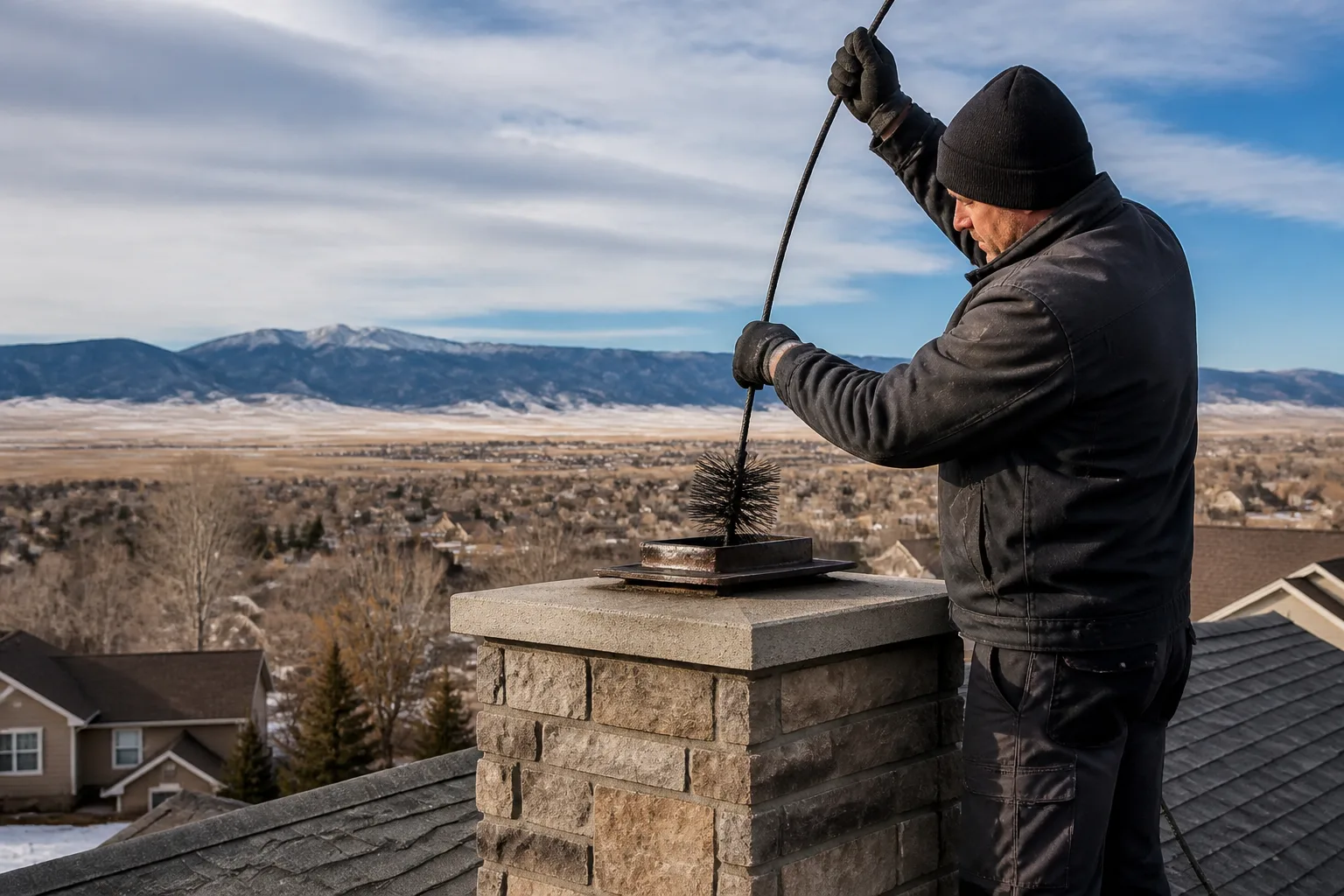
Top Signs You Need Chimney Cleaning Service – Don’t Ignore These
A fireplace that “just smokes a little when you first light it” is not a quirk. It’s either a cold flue, a negative pressure problem in your home, or a partial blockage, and each has a different fix. None of them go away on their own. Most of the expensive chimney work we’re called to in Highlands Ranch started as a small signal the homeowner read as normal fireplace behavior. Here are the signs worth catching early.
If you’d rather have a trained eye look than guess, call (855) 550-7361. We answer 24/7, and the estimate is free.
What are the earliest signs a chimney needs cleaning?
The earliest signs are usually mechanical, not cosmetic: a fire that’s harder to start than last season, smoke that rolls into the room before the flue warms up, and a firebox that smells sharp even on days when nothing is burning. Homeowners tend to wait for visible soot or a blackened brick face, and by the time those show up, the deposit layer inside the flue is usually heavy enough to change how the chimney draws. Anything that shifts the draft is a cleaning indicator, because draft is the first thing buildup interferes with.
Watch for these before you light the first fire of the season:
- A smoky smell in the room when the fireplace is cold and unused.
- Smoke that spills out during the first few minutes of lighting, then settles.
- A fire that needs more kindling or a hotter starter than it used to.
- Grit or flakes dropping onto the hearth when the damper is worked.
- A draft that feels weak when you hold a hand near the open damper.
None of these means your chimney is unsafe yet. They mean it’s telling you something. In our experience across Highlands Ranch, the fires that come back to a clean flue also burn more predictably, which matters when you’re heating a whole room on a cold Colorado evening and want the smoke to go up and stay up.
Creosote odor vs. backdraft odor: what’s the difference?
Creosote odor is sharp and acrid, and you smell it even when the fireplace isn’t in use. Backdraft odor is smoky, and it only shows up during operation. They point to two different problems. Creosote smell means deposits have built up inside the flue and are off-gassing into the house. Backdraft smell means the chimney isn’t pulling air correctly, usually because of pressure balance, a blockage, or a flue that’s too cold to establish draft.
Here’s why the distinction matters. If you treat a creosote smell with air freshener and a cracked window, the deposits stay put and keep accumulating through the season. If you treat a backdraft smell with more cleaning, you may be cleaning a flue whose real problem is pressure, not soot. The two get confused constantly because both smell like “chimney” to most people.
A few ways to tell them apart:
- Timing. Creosote odor lingers on warm days with no fire. Backdraft odor appears only when you’re burning.
- Intensity. Creosote smell is sharp and chemical. Backdraft smell is like standing near a campfire that won’t catch.
- Location. Creosote odor tends to concentrate near the firebox and damper. Backdraft odor follows the smoke, so you notice it at the room’s edge.
Colorado’s dry air and big temperature swings between day and night make backdraft more common here than homeowners expect. A flue that’s cold-soaked after a clear night can be stubborn about starting draft the next morning.
What do shiny or puffed deposits inside the firebox mean?
Shiny, glazed, or puffed deposits inside the firebox and flue throat are signs of Stage 2 or Stage 3 creosote. Flat black soot is different and easier to handle: it’s a lighter deposit that brushes away with a standard cleaning. Glazed creosote has been through repeated heating cycles, has hardened into a crust, and won’t come off with a brush alone. This isn’t a cosmetic distinction. It changes the cleaning method, and it changes what the chimney can safely tolerate.
Know what you’re looking at:
- Stage 1. Soot and light flaky deposits. Normal for a season of use. Brushes away cleanly.
- Stage 2. Hard, crusty, or glazed deposits that resist brushing. Needs mechanical removal with the right tooling.
- Stage 3. Puffed, honeycomb-like buildup that has filled in the flue’s surface. This is the level that most concerns trained technicians, and it calls for a professional assessment before another fire is lit.
If you see a glossy coating or a puffball texture on the smoke chamber walls, don’t wait for a routine cleaning window. Call a professional. We can look at it, tell you what stage it’s at, and explain what removal will actually involve rather than guessing from the ground up.
Can heavy buildup cause reduced draft before it causes visible problems?
Yes. Buildup in the flue throat area restricts the draw before it produces visible symptoms like smoke in the room. The throat is the narrowest part of the system, so a little deposit there has an outsized effect on airflow. Long before you see smoke, you’ll feel a sluggish fire, a damper that seems sticky, or a fireplace that only works with the window cracked. That’s draft restriction talking.
This is the sign most homeowners misread as a wood problem or a damper problem. They switch firewood, buy a new grate, adjust the damper, and nothing changes, because the problem is above the damper. The flue throat is doing exactly what a partially blocked pipe does in any system: it chokes the flow.
Reduced draft is a cleaning indicator because buildup is the cheapest possible cause, and a chimney sweep resolves it. But it’s also a structural indicator, because a damaged flue liner, a collapsed mortar joint, or a misaligned flue tile can restrict draft in the same way. A professional inspection tells you which one you have before anyone starts quoting repairs. That’s why we offer inspection as a standalone service: so you know exactly what you’re paying for and why, without it being bundled into a cleaning you didn’t ask about.
Ignore a draft restriction and it usually escalates. Fires smoke, then they back up, then the deposits get worse because the fire is burning inefficiently. What started as a chimney repair question turns into a full flue assessment.
Why does debris in the firebox matter?
Debris in the firebox is not just mess. Granules, tile fragments, and mortar dust are evidence that the flue liner itself is deteriorating, and cleaning alone won’t fix that. When material falls onto the hearth, it came from somewhere inside the system, and the most common source is the liner’s inner surface breaking down or a mortar joint opening up. Sweeping the firebox floor and calling it clean doesn’t address where the debris came from.
What each type of debris suggests:
- Granules. Often liner material shedding from the flue’s interior surface.
- Tile fragments. Clay flue tiles cracking or spalling, usually from heat cycling.
- Mortar dust or crumbs. Joints opening up between flue tiles, a known path for moisture and combustion gases.
- Soot flakes. Normal to a degree, but heavy flaking points to a cleaning that’s overdue.
This is where our approach to materials matters. When the liner is damaged but the chase is structurally sound, a full tear-out and reline is one option, not the only one. HeatShield ceramic flue resurfacing can restore a deteriorating liner from the inside, and DuraFlex flexible liner systems handle flue paths that rigid liners can’t navigate. Both are professional-grade products, and brands like Olympia Chimney, Famco, and Copperfield are part of the material set we work with because they’re what chimney professionals specify, not what’s easiest to source. We also handle fireplace repair when the firebox itself needs attention, so the system gets addressed from the bottom up.
What changes when a chimney sits unused through a Colorado summer?
A chimney that sat dormant through a Colorado summer has a higher probability of animal nesting or cap failure than one in near-constant use, and a living-room glance won’t catch either. Birds, squirrels, and insects find an open flue inviting. High winds, hail, and freeze-thaw cycles common along the Front Range work on the cap and crown, and a cracked crown lets water into the chase. The first fall fire is when most homeowners discover the problem, usually as a smoky smell or a fire that won’t draw.
That’s why the start of a new burning season is the right time for a visual check, and often a full cleaning, before the first log goes in. In Highlands Ranch, where the seasonal temperature swing is wide, the chimney’s interior has been through a summer’s worth of heating and cooling without a fire to dry it out. The signals a dormant chimney gives off:
- A nest or debris visible at the top of the flue, checked from the ground with binoculars.
- A missing, loose, or dented cap.
- A cracked or spalling crown at the top of the chase.
- Water stains or rust in the firebox after summer storms.
- A smoky smell in the house on the first cool evening, before any fire is lit.
Cap and crown replacement addresses the two leading causes of water intrusion damage, so it’s preventive as well as reactive. If you’re in Highlands Ranch and you haven’t had your chimney looked at since the spring, this is the season to do it.
When should you call a professional instead of checking it yourself?
You should call a professional anytime the sign involves the flue’s interior, the liner, or the smoke chamber. Those are the areas where a living-room look tells you almost nothing, and where the DIY route is genuinely risky. Creosote is flammable, and Stage 2 or Stage 3 deposits can ignite inside a flue. A heavy brush without the right tooling can also damage a liner that’s already failing. The safety math favors a trained technician for anything above the damper.
A few signs mean call now rather than schedule later:
- Smoke rolling into the room that didn’t happen last season.
- Visible glazed or puffed deposits in the firebox.
- Granules, tile fragments, or mortar dust on the hearth.
- A sharp, acrid smell that won’t clear on warm days.
Call (855) 550-7361. We answer 24/7, and dispatch runs from 7am to 7pm, Sunday through Friday. Our technicians have up to 12 years of experience working on the full system, from a routine sweep to a cap and crown replacement. If you’re in Highlands Ranch, we’ll give you a free estimate and tell you what the chimney is actually telling us before we recommend anything. If you want to browse our full range of services first, start with the main page for Chimney Sweep Highlands Ranch.
Related services in Highlands Ranch
If you’re working through the signs above, these are the pages most homeowners read next: chimney sweep, fireplace repair, and chimney repair. Each covers what a typical job involves and what we look for, so you can line up an appointment with confidence.
What happens when you call
- 1
A real person answersNo phone trees – you reach a local pro.
- 2
You get an upfront price rangeHonest numbers before anyone is dispatched.
- 3
A background-checked tech heads outLicensed & insured, dispatched right away.
- 4
You approve before work beginsNothing starts until you say go.
The Bottom Line
The signs a chimney needs cleaning are usually behavioral and mechanical, not cosmetic. A hard-to-start fire, a smoky first light, an acrid smell on a cold day, and debris on the hearth are all telling you something about the system’s condition, and none of them fix themselves with a new grate or a different firewood. Shiny deposits and puffed creosote call for a professional assessment. Granules and mortar dust point to liner wear that cleaning won’t resolve. And a chimney coming back from a Colorado summer deserves a look before the first fall fire.
If you’re in Highlands Ranch and need help, Chimney Sweep Highlands Ranch offers free estimates. Call (855) 550-7361. We answer 24/7, and fast dispatch runs from 7am to 7pm, Sunday through Friday.
Frequently Asked Questions
Most wood-burning chimneys should be cleaned roughly once per burning season, and inspected annually. A chimney that sees heavy use, or one with visible deposit buildup, may need more frequent sweeps. Gas fireplaces still need an annual inspection even though they produce less soot, because the flue and venting can still be affected by moisture and blockage. Call (855) 550-7361 for an exact recommendation – estimates are free.
Creosote smells sharp and acrid, and it’s noticeable even when the fireplace isn’t burning. It is a cleaning indicator, because the smell means deposits inside the flue are off-gassing into the home. A smoky smell that only appears during operation is more likely a backdraft or draft problem, which a professional inspection should sort out. Call (855) 550-7361 and we’ll help you tell the two apart.
You can safely clean a firebox and inspect what’s visible from the hearth, but the flue’s interior, the liner, and the smoke chamber are best left to a trained technician. Glazed creosote needs specific tooling, and heavy brushing on a damaged liner can cause more harm. If you see shiny or puffed deposits, call (855) 550-7361 rather than brush. Estimates are free.
Buildup keeps accumulating, draft weakens, and creosote becomes more concentrated with each heating cycle. Liner damage that cleaning would have caught early becomes a repair, and repairs that a sweep would have resolved can escalate. Skipping a cleaning mostly costs money and risk over time rather than causing an immediate incident, but there’s no version where the chimney gets safer by waiting. Call (855) 550-7361 for a free estimate and a straight answer.
Written by the team at Chimney Sweep Highlands Ranch.
Need Chimney Cleaning Help?
Call Chimney Sweep Highlands Ranch - the local pro we connect you with is licensed and insured, with free written estimates in Highlands Ranch.
(855) 550-7361